
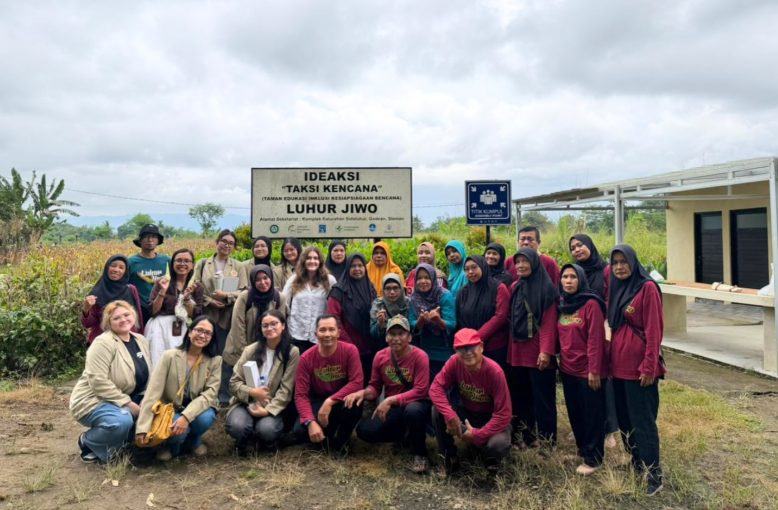
The International Undergraduate Program of the Faculty of Psychology at Universitas Gadjah Mada organized a field study activity for the Community Empowerment & Psychoeducation course on Thursday, April 30, 2026. This activity was conducted at Paguyuban Swabantu Luhur Jiwo, located in Godean, Sleman, Yogyakarta. The field study aimed to strengthen students’ practical understanding of community empowerment, psychoeducation, and psychosocial approaches within society, particularly for Individuals with Mental Disorders (ODGJ).
The activity involved 10 psychology students, 1 supervising lecturer, 1 course assistant, and several volunteers who actively participated during the program. The field study began with students gathering at the Faculty of Psychology UGM before traveling together to the activity location. Upon arrival, participants engaged in joint activities and discussions with members and volunteers of Paguyuban Swabantu Luhur Jiwo.
Paguyuban Swabantu Luhur Jiwo was chosen as the destination for this field study because of its important role as a community-based rehabilitation and recovery platform for ODGJ. The community supports individuals with mental disorders in regaining independence and productivity, especially through agricultural activities. Through this empowerment approach, ODGJ are encouraged to rebuild their confidence, social functioning, and work skills before returning fully to society.
During the activity, students observed how psychoeducation and empowerment programs are implemented directly in the community. Students also learned about the importance of social support systems, volunteer involvement, and collective community participation in assisting recovery processes for ODGJ. The interaction between volunteers, local communities, and ODGJ demonstrated that recovery is not only related to medical treatment but also involves social acceptance, meaningful activities, and supportive environments.
One of the key focuses of the field study was understanding the role of community-based psychosocial approaches. Students observed how empowerment activities, such as farming and community engagement, can help individuals develop responsibility, social interaction skills, and emotional stability. These activities also reduce stigma by creating opportunities for ODGJ to contribute positively within the community.
In addition, the discussion sessions provided students with insight into the challenges faced during the rehabilitation process. Volunteers explained the importance of patience, empathy, consistency, and collaboration between families, communities, and mental health services in supporting recovery. Students were encouraged to develop greater sensitivity toward mental health issues and to understand the value of inclusive community empowerment programs.
Overall, this field study provided meaningful learning experiences for students of the Community Empowerment & Psychoeducation course. Beyond theoretical understanding gained in class, students were able to directly observe the real implementation of community empowerment and psychoeducation strategies in society. The activity also highlighted the importance of community involvement in creating supportive environments for ODGJ to recover, become independent, and live productively within society.
Writer: Thessalonica Faith Hill Joseph Kurnia