• About UGM
  • Academics
  • IT Center
  • Library
  • Research
  • Webmail
Universitas Gadjah Mada
  • About
    • Dean’s Welcome
    • Director
  • Academic
    • Academic Staff
    • Academic Guide
    • Curriculum Map
      • 2020 Curriculum Map and Course Description
      • 2011 Curriculum Map and Course Description
    • Student Mobility Program
      • Inbound Student Mobility Program
      • Outbound Student Mobility Program
    • Student’s Project
  • Admission
    • Admission FAQ
  • Research
  • Collaboration
  • Beranda
  • SDG 11: Sustainable Cities and Communities
  • SDG 11: Sustainable Cities and Communities
Arsip:

SDG 11: Sustainable Cities and Communities

Field Study Activity on Community Empowerment and Psychoeducation at Paguyuban Swabantu Luhur Jiwo

Release Friday, 1 May 2026

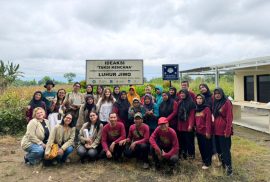
The International Undergraduate Program of the Faculty of Psychology at Universitas Gadjah Mada organized a field study activity for the Community Empowerment & Psychoeducation course on Thursday, April 30, 2026. This activity was conducted at Paguyuban Swabantu Luhur Jiwo, located in Godean, Sleman, Yogyakarta. The field study aimed to strengthen students’ practical understanding of community empowerment, psychoeducation, and psychosocial approaches within society, particularly for Individuals with Mental Disorders (ODGJ).

Guest Lecture on Community Empowerment and Psychoeducation: Mobile Clinics and Psychosocial Support for Aceh Flood Survivors

Release Monday, 23 February 2026

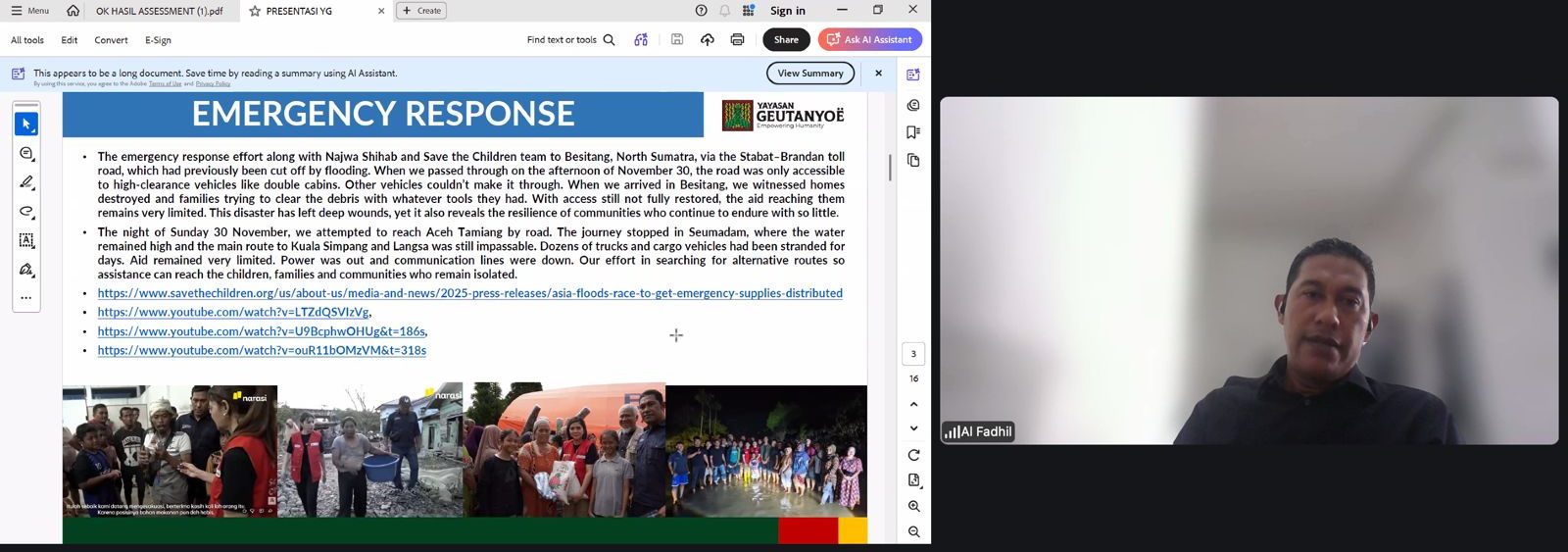
On 19 February 2026, students of the course Community Empowerment and Psychoeducation attended a guest lecture delivered by Al Fadhil, Director of Geutanyoe Foundation, a humanitarian organization actively involved in disaster response and community-based recovery programmes. Titled “Understanding and Addressing Needs: Mobile Clinic and Psychoeducation Programmes for Aceh Flood Survivors,” the session brought real humanitarian field experience into the classroom and connected theory with practice in disaster settings.

Heavy rainfall in November 2025 triggered widespread floods and landslides across Aceh Province, affecting thousands of families. Schools were suspended, infrastructure was damaged, and access to clean water and healthcare became limited. Beyond the physical destruction, the disaster also left significant psychological and social impacts on communities.

Disaster Response and Field Experience

During the lecture, Al Fadhil shared firsthand experiences from emergency response efforts, including distributing food, clean water, and medicine to isolated areas such as Aceh Tamiang. With damaged roads and limited access, some aid had to be delivered by sea before continuing by land. Power outages, weak communication networks, and limited health facilities made the situation even more challenging.

The session also introduced the cluster approach in disaster management, where sectors such as shelter, health, water and sanitation, protection, and psychosocial support coordinate under a structured system. Students learned that effective humanitarian response relies on collaboration between government institutions, non-governmental organizations, and community actors.

Rapid needs assessment was another key topic. By combining interviews with local leaders, health workers, and vulnerable groups with field observations and official reports, humanitarian teams can identify urgent priorities such as clean water, medical services, shelter, and psychosocial support.

Integrating Mobile Clinics and Psychoeducation

A highlight of the lecture was the integration of mobile health services with structured psychoeducation programmes. The mobile clinic model brings essential healthcare directly to evacuation sites and remote villages. Services include medical consultations, treatment of common illnesses, maternal and child health care, and distribution of essential medicines. By reducing access barriers, the programme ensures timely and equitable care.

Alongside medical services, psychoeducation sessions are conducted for children, women, and caregivers. These sessions focus on understanding stress reactions, coping with trauma, parenting during crisis situations, and practicing self-care. Safe spaces and child-friendly activities help restore a sense of safety and normalcy, especially for children who are particularly vulnerable to psychological distress.

For students of Community Empowerment and Psychoeducation, the lecture served as a reminder that empowerment is about providing material assistance, strengthening resilience, and upholding human dignity. By connecting classroom concepts with real humanitarian practice, the session helped deepen students’ understanding of the important role psychology plays in disaster response and community recovery.


Writer: Thessalonica Faith Hill Joseph Kurnia

Event Recap – Guest Lecture on Psychology and Culture Class

Release Wednesday, 19 March 2025

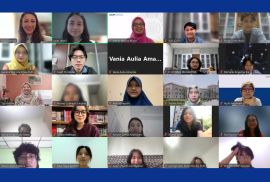
On March 18, 2024, students of the Psychology and Culture course attended an online class session inviting Pina Marsico, PhD. She serves as the Associate Professor of Development and Educational Psychology at the University of Salerno in Italy, a Visiting Professor at the PhD Programme in Psychology at the Federal University of Bahia in Brazil, and an Associate Researcher at Aalborg University in Denmark. With extensive experience in research within the educational field, she is now the leading figure in the Cultural Psychology of Education. Through an approximately 100-minute learning session, precisely from 2.20 PM to 4 PM, the students were granted an opportunity to delve into the interplay among culture, the individual, and the environment.

Release

  • Field Study Activity on Community Empowerment and Psychoeducation at Paguyuban Swabantu Luhur Jiwo
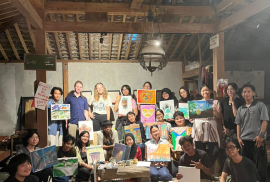
  • Celebrating Kartini Day and the Psychology of Freedom
  • Sisterhood on Campus: How Female Friendships Support Mental Health
  • IUP Psychology UGM Holds First Intake Selection for Prospective Students
  • Asma Ningrum Abdurrahman Receives Best IUP Student Publication Manuscript Award
Universitas Gadjah Mada

International Undergraduate Program
Fakultas Psikologi
Universitas Gadjah Mada
Jl. Sosio Humaniora Bulaksumur Yogyakarta 55281 Indonesia
iup.psikologi[at]ugm.ac.id
+62 (274) 550435 (hunting)
+62 (274) 550435 ext 158

  • About Us
  • Academic Staff
  • Academic Guide
  • 2020 Curriculum Map
  • 2011 Curriculum Map
  • Student’s Project
  • Tell Us More!
  • Admission
  • Admission FAQ
  • Research
  • Collaboration

© Universitas Gadjah Mada

KEBIJAKAN PRIVASI/PRIVACY POLICY