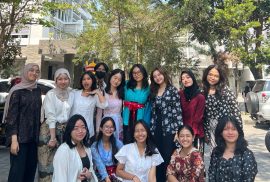
International Women’s Day is a special moment to celebrate the achievements of women, reflect on the challenges they face, and recognize the importance of solidarity and support among women. On university campuses, these bonds of sisterhood are especially meaningful. At the Faculty of Psychology in Universitas Gadjah Mada, female students significantly outnumber male students, creating an environment where friendships among women become a vital source of support, understanding, and empowerment.
SDG 3: Good Health and Well-being
Heavy rainfall in November 2025 triggered widespread floods and landslides across Aceh Province, affecting thousands of families. Schools were suspended, infrastructure was damaged, and access to clean water and healthcare became limited. Beyond the physical destruction, the disaster also left significant psychological and social impacts on communities.
Disaster Response and Field Experience
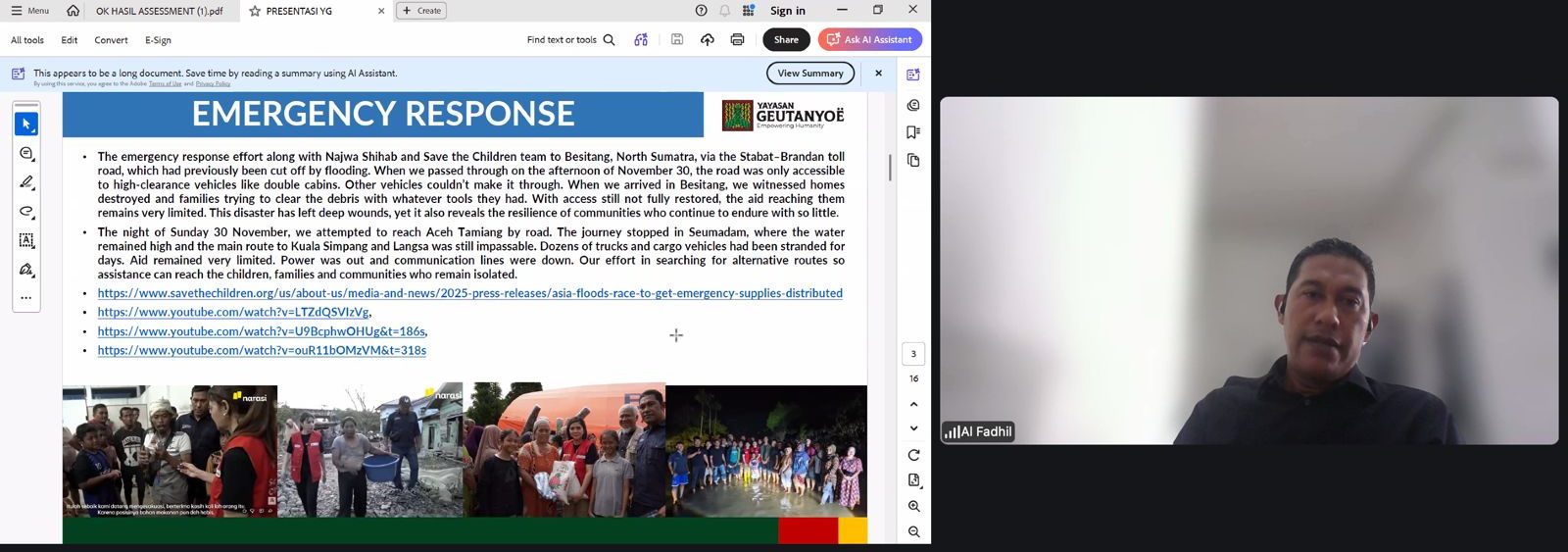
During the lecture, Al Fadhil shared firsthand experiences from emergency response efforts, including distributing food, clean water, and medicine to isolated areas such as Aceh Tamiang. With damaged roads and limited access, some aid had to be delivered by sea before continuing by land. Power outages, weak communication networks, and limited health facilities made the situation even more challenging.
The session also introduced the cluster approach in disaster management, where sectors such as shelter, health, water and sanitation, protection, and psychosocial support coordinate under a structured system. Students learned that effective humanitarian response relies on collaboration between government institutions, non-governmental organizations, and community actors.
Rapid needs assessment was another key topic. By combining interviews with local leaders, health workers, and vulnerable groups with field observations and official reports, humanitarian teams can identify urgent priorities such as clean water, medical services, shelter, and psychosocial support.
Integrating Mobile Clinics and Psychoeducation
A highlight of the lecture was the integration of mobile health services with structured psychoeducation programmes. The mobile clinic model brings essential healthcare directly to evacuation sites and remote villages. Services include medical consultations, treatment of common illnesses, maternal and child health care, and distribution of essential medicines. By reducing access barriers, the programme ensures timely and equitable care.
Alongside medical services, psychoeducation sessions are conducted for children, women, and caregivers. These sessions focus on understanding stress reactions, coping with trauma, parenting during crisis situations, and practicing self-care. Safe spaces and child-friendly activities help restore a sense of safety and normalcy, especially for children who are particularly vulnerable to psychological distress.
For students of Community Empowerment and Psychoeducation, the lecture served as a reminder that empowerment is about providing material assistance, strengthening resilience, and upholding human dignity. By connecting classroom concepts with real humanitarian practice, the session helped deepen students’ understanding of the important role psychology plays in disaster response and community recovery.
Writer: Thessalonica Faith Hill Joseph Kurnia
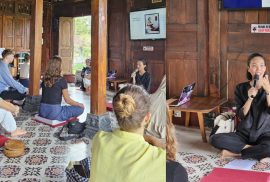
On November 29, 2024, students of the course Psychology of Emotion went on a field study at Savasana Coffee and Event Space in Bantul. The field study was a fruitful discussion on mindfulness-based therapy techniques presented by Annisa Poedji Pratiwi, M.Psi., Psikolog from Charisma Consulting. The session, which took place from 9:00 AM to 11:30 AM, was centered on how mindfulness may be incorporated into mental health and emotional control.
With a focus on how mindfulness treatment can promote emotional balance and enhance general mental health, Pratiwi’s experience led participants through important ideas and techniques. Setting the tone for a thoughtful and active learning environment, the session started with an enlightening evaluation of the participants’ emotional states.
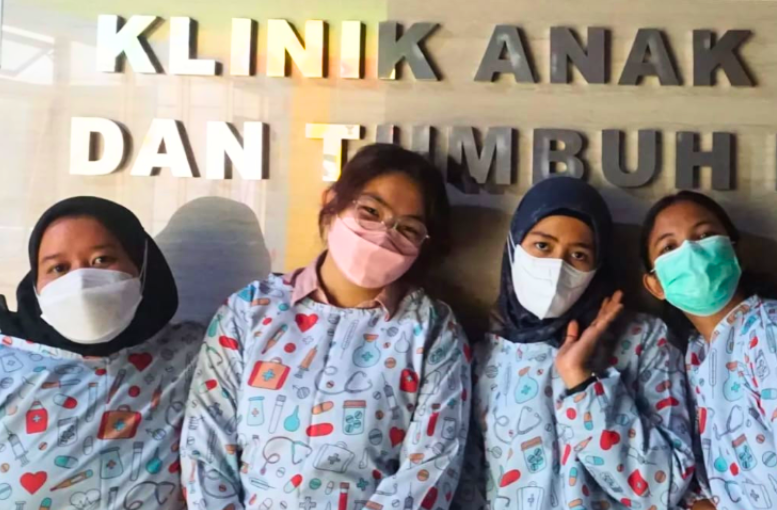
Being a child psychologist has always been Naomi’s passion and future goal, so when she came across Career Center’s internship offer, she immediately applied and submitted all the required documents until she reached the interview phase, which she successfully passed. During her internship, Naomi had a lot of experience and direct exposure to the hands-on practice of child psychology that she did not get to learn inside the classroom, specifically on handling various IQ administration tests (such as Weschler’s Intelligence Scale for Children, WPPSI, Snijder Oomen Non-verbal Testing).

Naomi also reflects that she got to learn a lot about discovering new modes of communication with children during each session, and how to use the right tools that are appropriate for each child’s condition. In addition to that, she realized that being an intern really helped her observe and understand the subtle dynamics offered in an actual hospital, which includes how psychologists and fellow health practitioners work together in diagnosing a child’s condition and finding the right strategies to tackle the problem. For Naomi, however, one of the biggest lessons she learned from her internship program is how to be much more patient, especially when it comes to dealing with children as clients.
When asked about what she would say to her juniors and future IUP psychology students, Naomi mentioned, “There are lots of alternatives when it comes to your education plan. Just remember to stay true to your goals rather than surrender to the fear of missing out, because that’s what I felt when everyone went for an exchange program while I did not. You do you, guys!”.
Author: Nabila
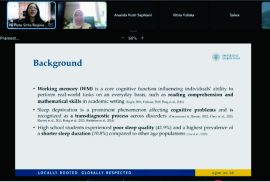
On Thursday, 16 January 2024, IUP Psychology conducted a seminar with Universiti Teknologi Malaysia for the event titled “Undergraduate Final Year Project International Seminar 2024”. In this seminar, three students of IUP Psychology participated as speakers where they briefly presented their thesis. The first participant, Ni Putu Sitha, presented her thesis about sleep deprivation, with the title “The Effect of Moderate Sleep Deprivation on Working Memory Performance.” Her experience was both enlightening and engaging. The virtual platform provided an opportunity to connect with a diverse audience interested in the world of research and, of course, the intricate relationship between sleep and cognitive function.